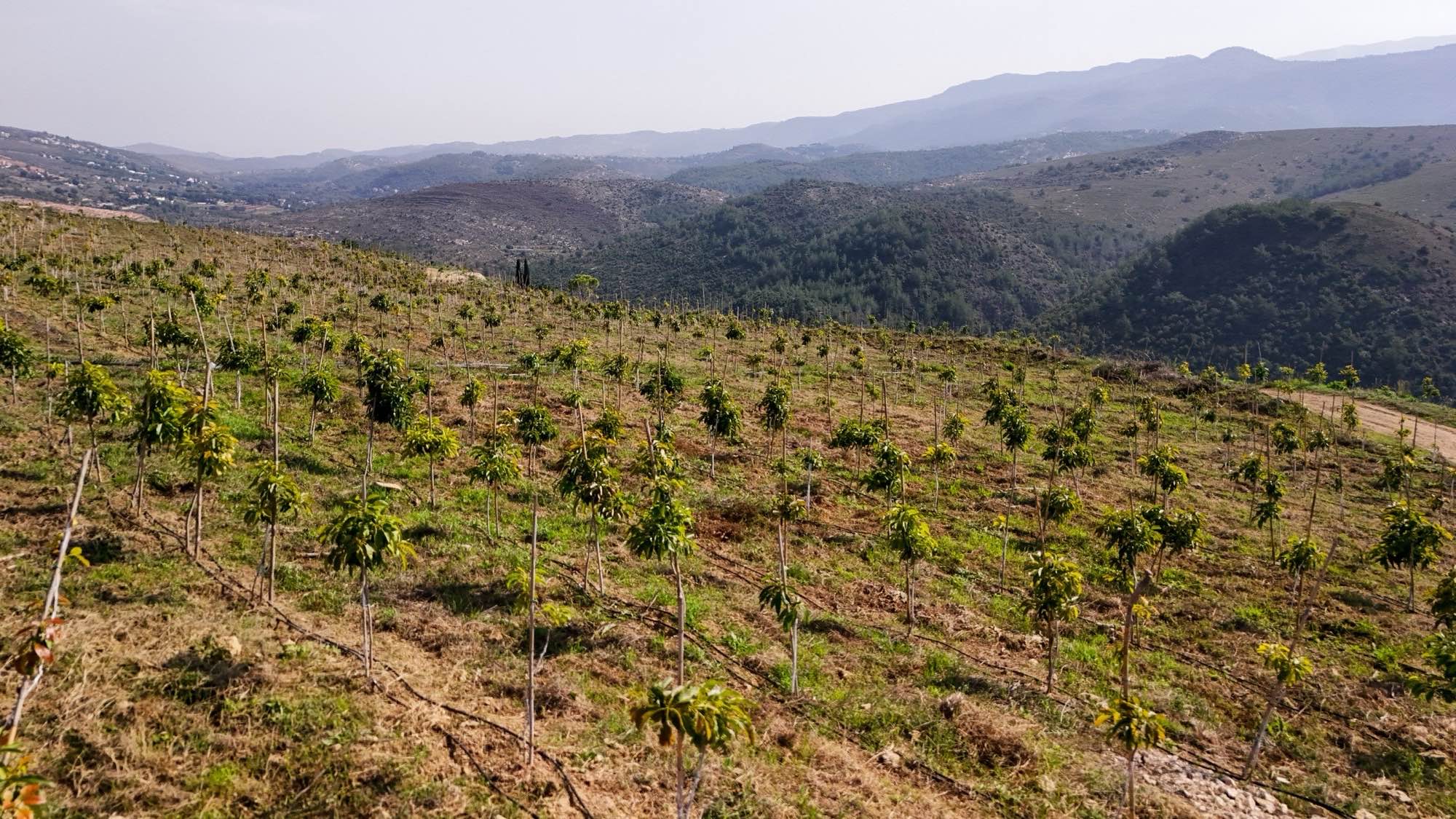
A hillside that had
everything but a farmer.
Ilat sits below five hundred metres, comfortably inside the altitude avocado needs. Deep soil, long light, and a spring that has never run dry.
Everything the crop asks for, on land nobody had planted.
Get in touch →The ground itself.
The orchard sits on a slope above the village, opened block by block and terraced where the fall of the land demanded it. Roads run through it so every row can be reached. Deep soil, good drainage, and enough sun through the year that the trees rarely stop growing.
Below five hundred metres, avocado comfortable here in a way it is not higher up the mountain.
Planted close,
kept low.
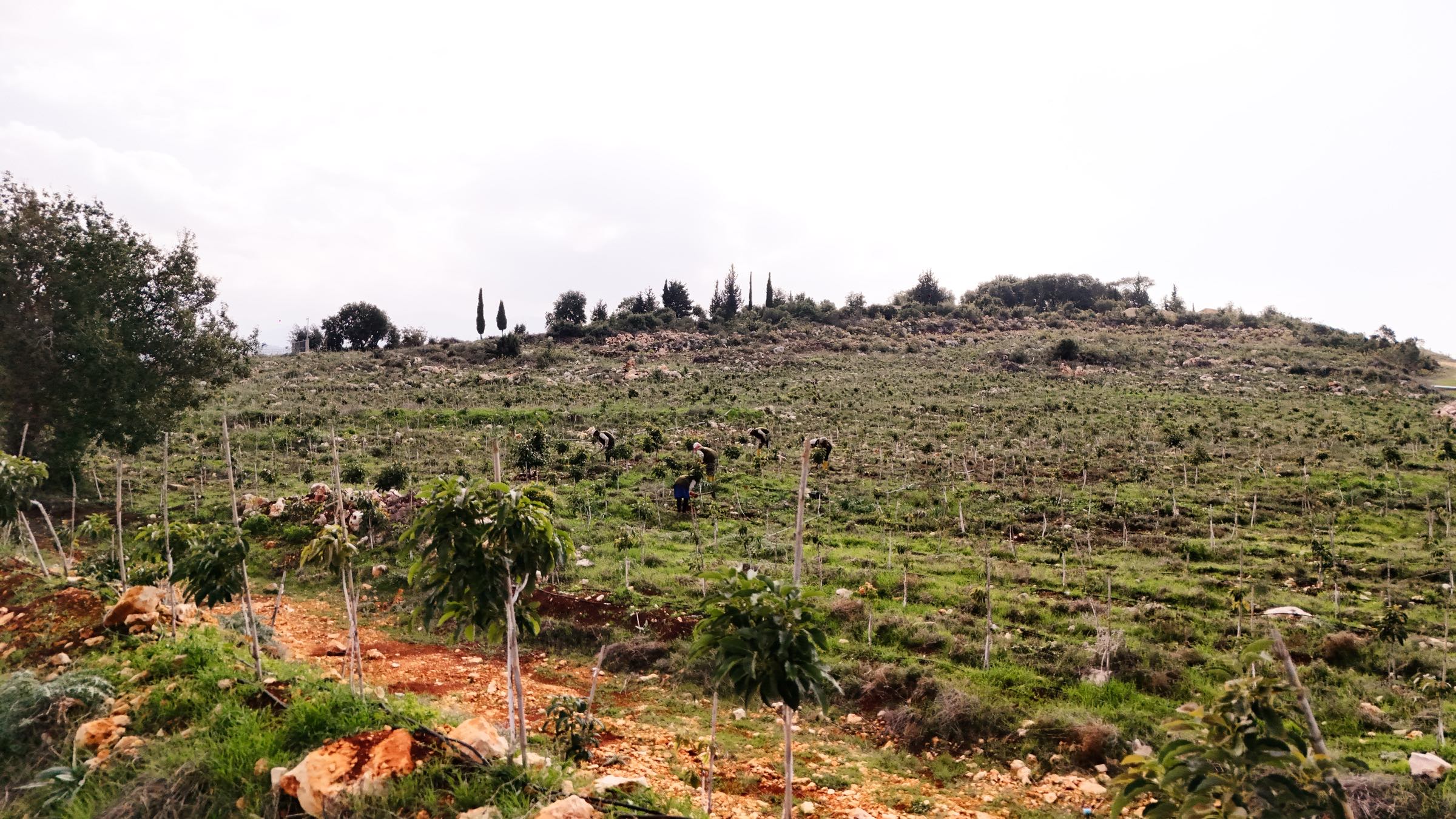
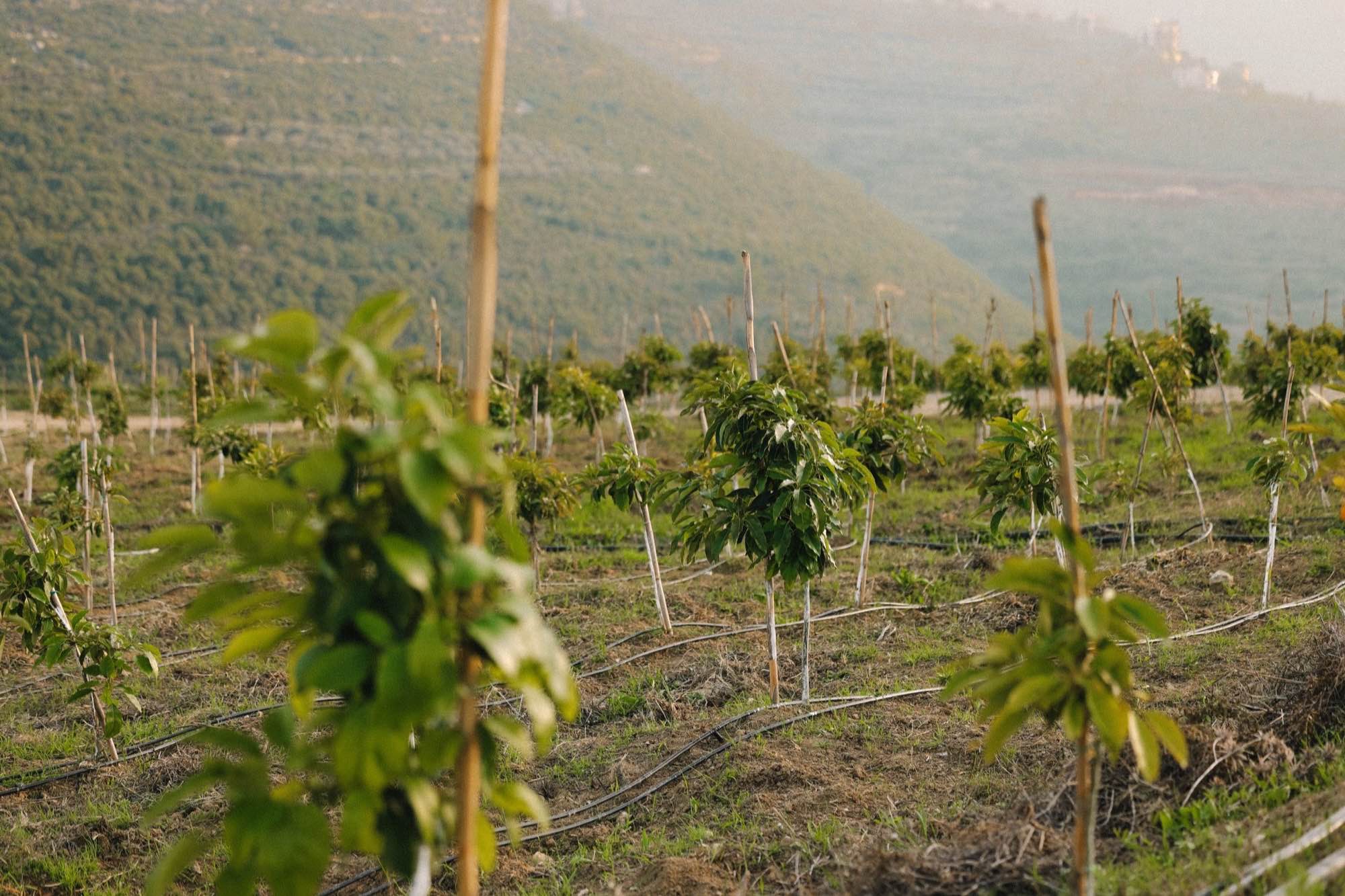
The orchard carries around 2,200 trees to the hectare, where a conventional avocado orchard carries a few hundred. The trees are grown as a low hedge rather than allowed to run tall.
It is a deliberate choice, and it changes how the farm is worked. Low trees can be walked, inspected and understood - disease is seen early, fruit can be counted, and picking happens from the ground rather than from ladders. It also means more from every hectare, on land that is not easily replaced.
A spring that runs all year.
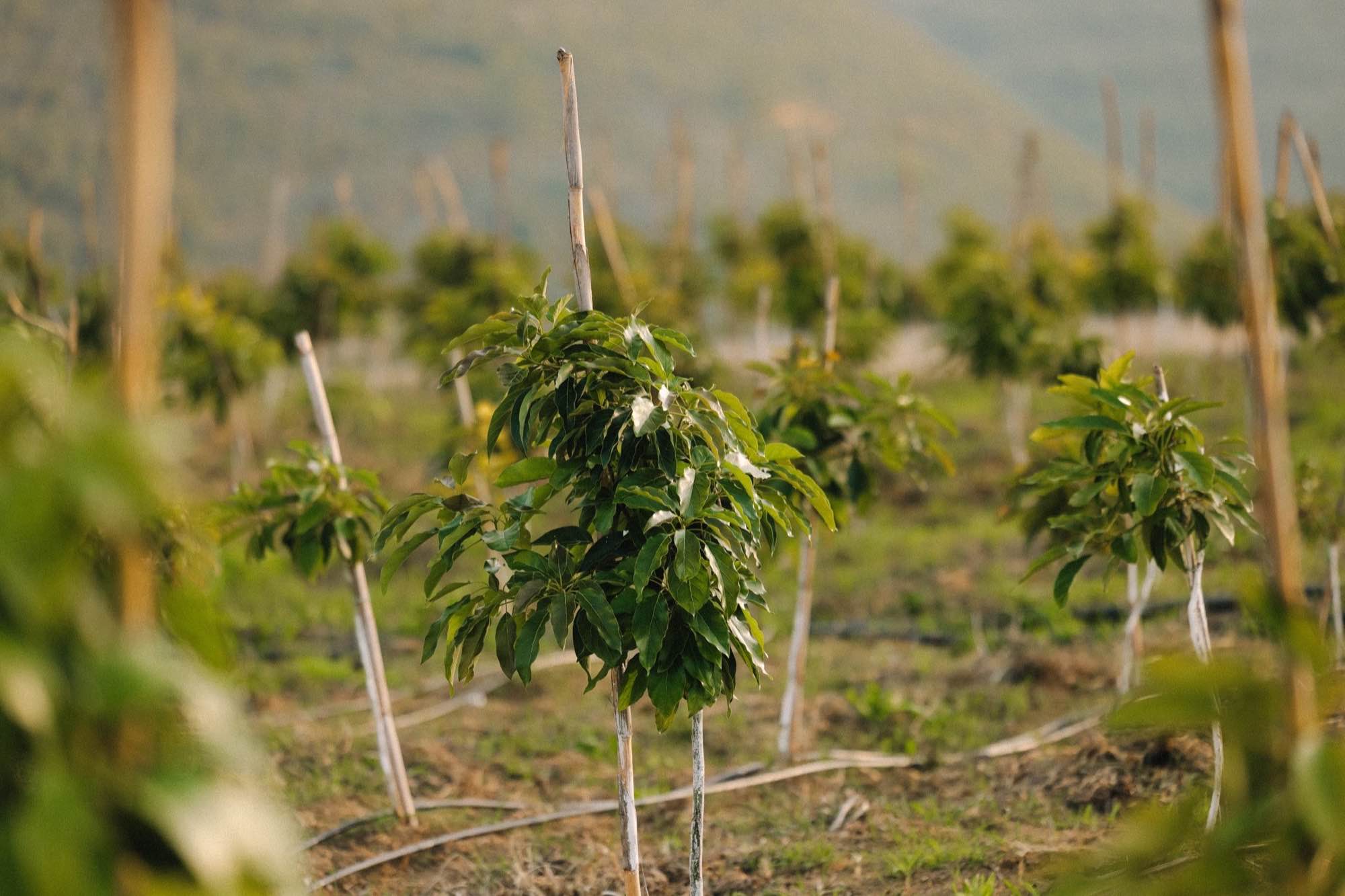
The water comes from a natural spring on the land, flowing without interruption through the seasons. A pump lifts it 250 metres up to the orchard at around sixty-five cubic metres an hour, filling storage continuously.
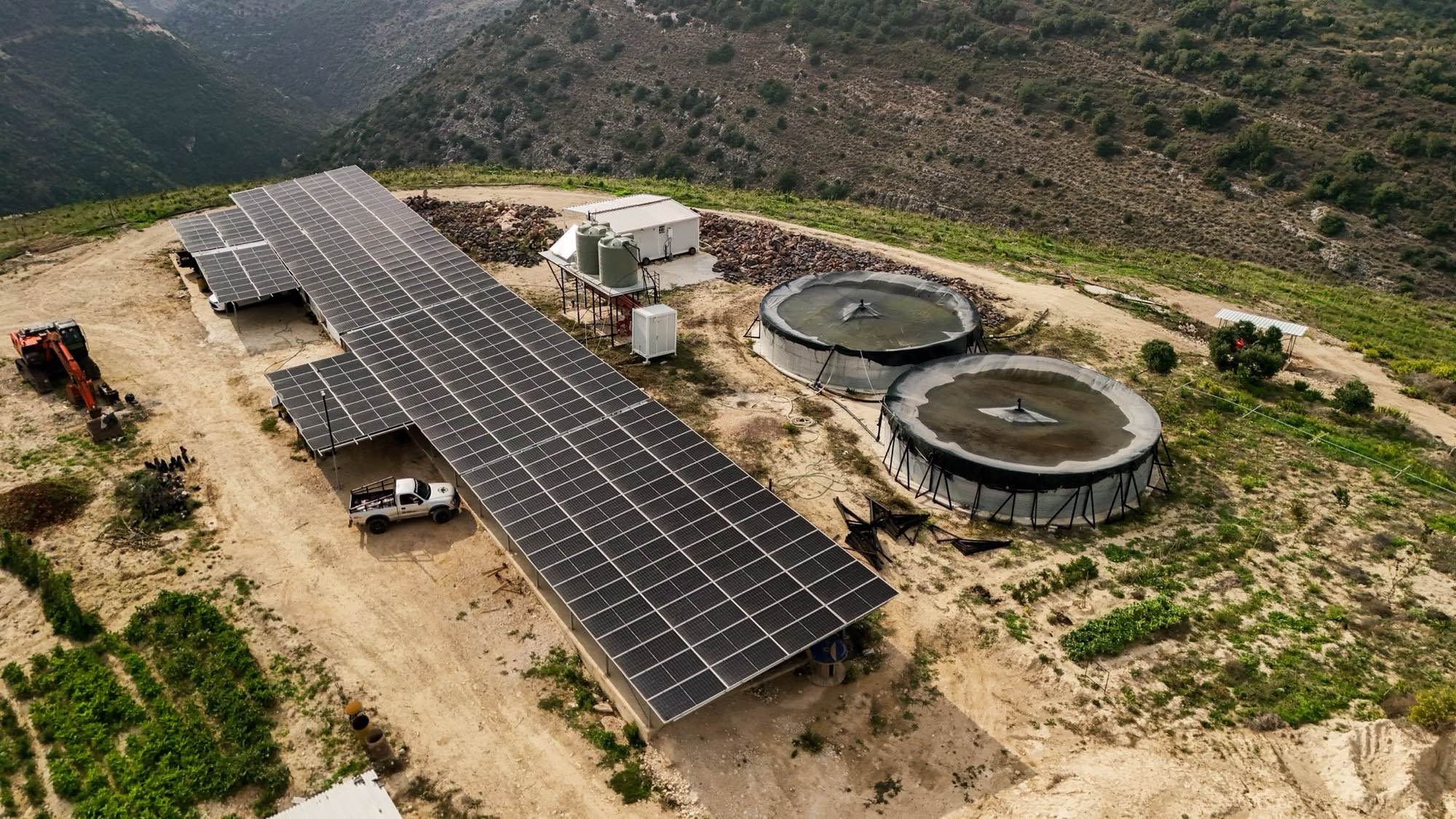
Two tanks hold it before it reaches the trees, with a third and larger tank arriving in 2027 and a second source being drilled the same year. From there it goes out by drip, tree by tree, so that nothing is poured where it is not needed.
The sun does the work.
More than 350 solar panels power the farm - the pumping, the irrigation, the offices, the yard lights and the accommodation - with batteries carrying the night and a generator standing by but rarely needed.
The array is deliberately larger than the pump requires. Solar seldom runs at its rated output; building in the margin means the water keeps moving on a grey day as well as a bright one. A second pump and a larger array follow in 2027.
A young orchard.
The orchard was planted from August 2025, and the first fruit has begun to appear on the earliest trees. The first commercial harvest is expected in 2028.